UV marking found its place where heat is the enemy
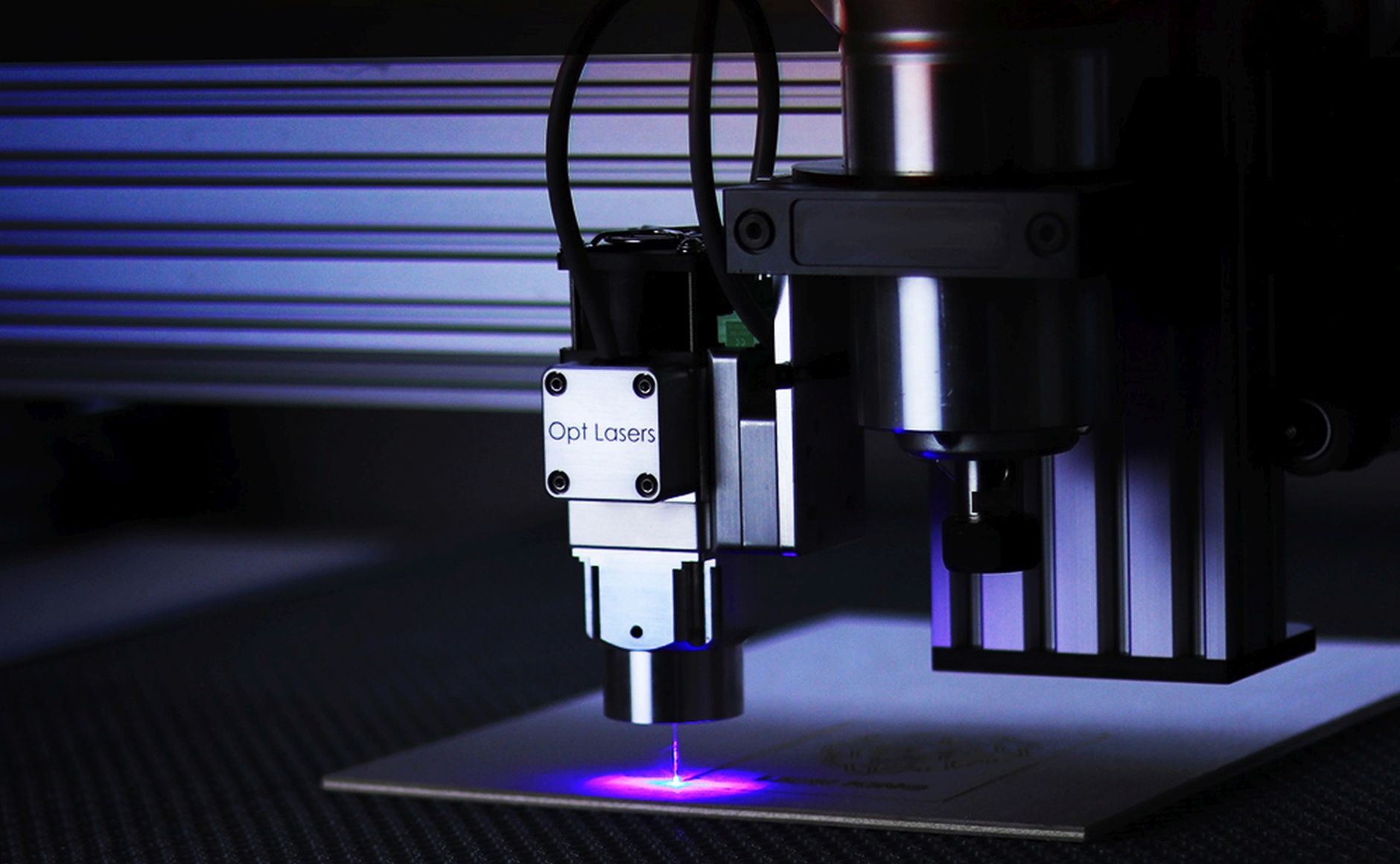
At 355 nm the mark comes from breaking molecular bonds rather than melting. For plastics, glass and thin coatings, that difference decides whether the part survives.

Most industrial marking is thermal. A fiber or CO2 beam heats the surface until it melts, oxidises, foams or ablates, and the contrast comes from that change. UV marking at 355 nm works differently enough that it occupies a distinct application space rather than competing on price.
Cold marking, in practice
Photons at 355 nm carry enough energy to break chemical bonds directly. Material can be removed or altered with far less energy conducted into the surrounding area, which is usually described as a cold process. It is not literally cold, but the heat-affected zone is small enough that the distinction is meaningful.
For a thin plastic housing, that means marking without melting a rim around the characters. For coated glass, it means removing a coating layer without cracking the substrate. For a flexible circuit, it means marking a polyimide layer without damaging what sits underneath.
Where it is genuinely required
Medical devices. Polymer components carrying UDI codes cannot tolerate a melted, raised mark that harbours contamination or interferes with fit.
Electronics. Marking on packages, connectors and flex circuits sits close to structures that heat would damage.
Glass and ceramics. Fiber lasers mark these poorly or not at all; UV interacts with a much wider range of transparent and brittle materials.
Highly pigmented plastics. Some polymer and additive combinations simply do not produce contrast under infrared but respond well at 355 nm.
The cost side
UV sources are more expensive per watt than fiber, generally lower in average power, and their optics are more sensitive to contamination. Marking speeds on materials that a fiber laser handles well are usually slower.
That combination keeps UV out of general metal marking, where fiber remains overwhelmingly the right answer. The selection question is not which laser marks faster, but whether the material tolerates a thermal process at all.
A practical selection habit
Shops running mixed work often find the sensible configuration is a fiber marker for metals and a UV marker for polymers and glass, rather than one compromise machine. The two are complementary tools, and treating them as competitors leads to buying the wrong one.
This article was produced by the LasersNews AI desk and reviewed by our editors.
Related reading

Traceability rules quietly reshape what a marking system has to do
Permanent part identification is no longer a finishing step — it is a data problem that happens to involve a…
Traceability rules are now writing the marking specification
UDI, aerospace part marking and battery passports each demand a code that survives the product's life. Perman…
Annealing marks keep the surface intact, which is exactly why medical buys them
Heating stainless just enough to grow a coloured oxide leaves the passive layer and the geometry untouched. G…