Raman spectroscopy moved into process control because it ignores water
Infrared absorption is swamped by water in aqueous processes. Raman scattering is not, which opened bioprocessing to inline optical measurement.
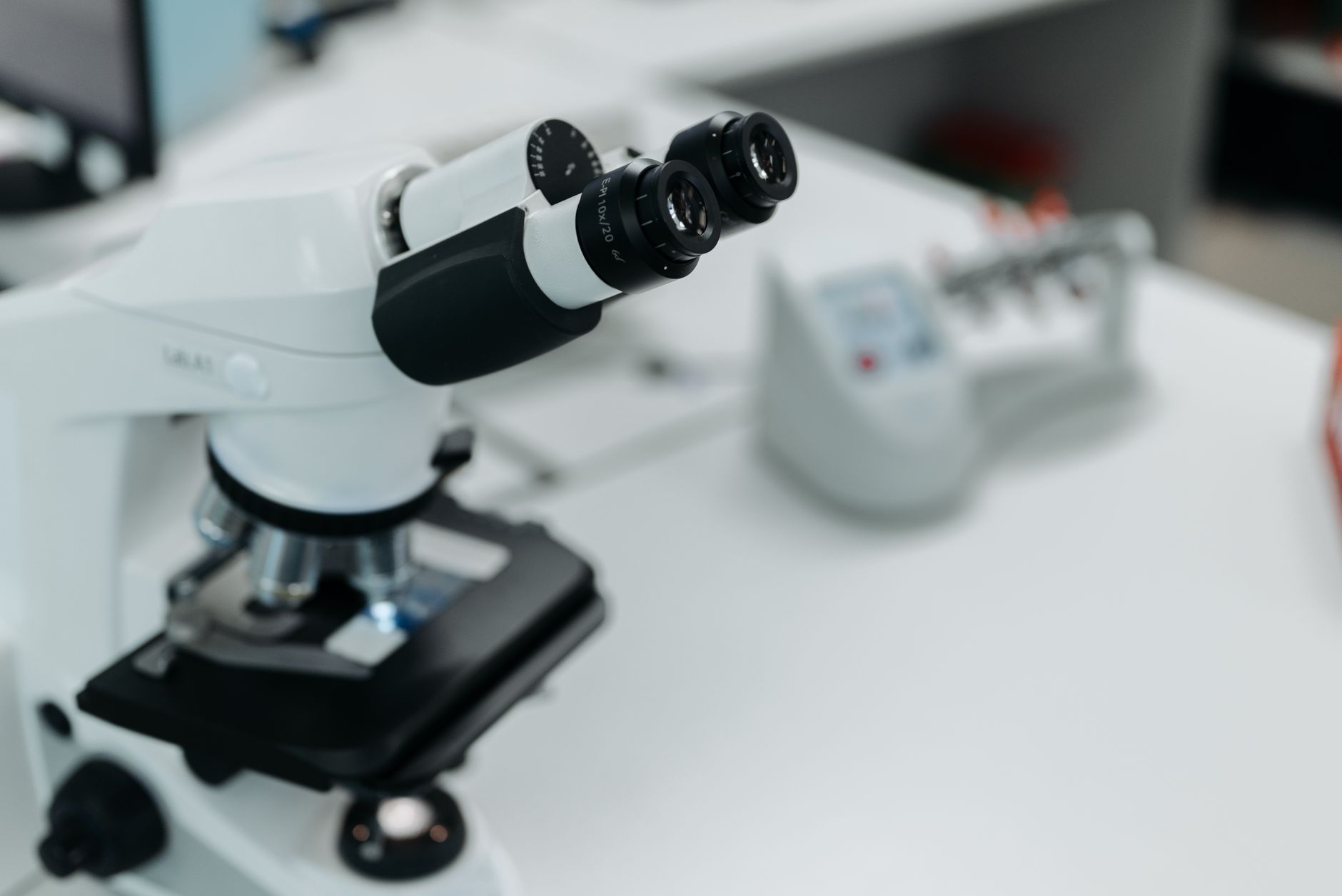
Raman spectroscopy measures the small fraction of scattered light shifted in frequency by molecular vibrations. It gives a chemical fingerprint, and it has moved from laboratory instrument to inline process analyser in specific industries for a specific reason.
The water advantage
Infrared absorption spectroscopy is a mature and sensitive technique, and it is largely unusable in aqueous systems because water absorbs infrared strongly across the useful range. In a fermentation broth or a cell culture, the water signal dominates.
Water is a weak Raman scatterer. A Raman spectrum of an aqueous sample shows the solutes rather than the solvent, which makes the technique directly applicable where infrared is not.
Where it is used
Bioprocessing. Monitoring glucose, lactate, glutamine and product concentration in cell culture, in real time, without sampling. That last point matters: every physical sample is a contamination risk and a delay.
Pharmaceutical manufacturing. Identifying raw materials through container walls, monitoring blend uniformity and crystallisation.
Chemical processing. Reaction monitoring where composition determines endpoint.
Polymer production. Composition and crystallinity.
The practical difficulties
Weak signal. Raman scattering is inefficient, so measurements need sensitive detectors and integration time, or high laser power that may damage the sample.
Fluorescence. Many samples fluoresce under laser excitation, producing a broad background orders of magnitude stronger than the Raman signal. Longer excitation wavelengths reduce this at the cost of scattering efficiency, and it remains the most common obstacle.
Calibration. Converting spectra to concentrations requires multivariate models built on reference data. Those models are process specific, and they need maintenance as the process changes.
Why calibration is the real project
The instrument works. Building and validating the chemometric model that turns spectra into a control signal is where the effort sits, and it requires reference measurements across the operating range including conditions the process rarely visits.
Manufacturers who scoped a Raman installation as an instrument purchase have generally found the model development and its lifecycle maintenance to be the larger commitment — which is the same pattern as monitoring systems elsewhere, and worth anticipating rather than discovering.
This article was produced by the LasersNews AI desk and reviewed by our editors.
Related reading
Integrated photonics narrows the gap between laboratory result and manufacturable part
Foundry access and standardised process design kits are doing for photonics roughly what they did for electro…
Metasurface optics are running into the manufacturing question
Flat lenses built from sub-wavelength structures work. Producing them at volume, at yield, with the tolerance…
Photonics found its foundry model, and the effect resembles electronics in the 1980s
Shared process design kits and multi-project wafer runs let a small team design a photonic chip without ownin…