Optical tweezers became a force measurement tool, not just a manipulator
Trapping a micron-scale particle is the demonstration. Calibrating the trap into a piconewton force sensor is what made it a scientific instrument.

A tightly focused laser beam traps a small dielectric particle near its focus through the gradient force. Demonstrating that is striking, and it earned a share of the 2018 physics Nobel. The reason optical tweezers matter as an instrument is different: the trap behaves as a spring, and a calibrated spring is a force sensor.
From trap to force sensor
Near the focus, the restoring force on a trapped particle is approximately proportional to its displacement. Measure the displacement — usually by imaging the forward-scattered light onto a position sensitive detector — and multiply by the calibrated stiffness, and you have the force acting on the particle.
The accessible range is roughly a few tenths to a hundred piconewtons, with sub-nanometre position resolution and millisecond or better time resolution.
That is precisely the range of forces that individual biological molecules generate.
What that enabled
Molecular motors. Measuring the force and step size of kinesin walking along a microtubule, of myosin in muscle, of RNA polymerase transcribing DNA. These are single-molecule measurements of mechanical behaviour that ensemble methods average away.
Nucleic acid mechanics. Unzipping DNA and observing folding and unfolding of RNA structures under controlled load.
Protein folding. Applying force to a single protein and watching it unfold and refold.
The calibration requirement
Trap stiffness depends on laser power, focal quality, particle size and refractive index, and the local viscosity. It must be measured, not assumed.
Standard methods use the particle's Brownian motion: analysing the power spectrum of its thermal fluctuations gives stiffness directly. That works well and requires knowing the medium's viscosity, which is temperature dependent — and laser absorption heats the sample locally, which changes viscosity.
Careful practitioners measure stiffness under the actual experimental conditions rather than transferring a calibration.
Beyond biology
The same instrument measures colloidal interactions, tests fluctuation theorems in statistical mechanics, and manipulates particles in microfluidic and photonic assembly.
The trajectory is characteristic of a good instrument: a striking demonstration, then a decade turning it into a calibrated measurement, and only then a research tool that produces results the demonstration could not.
This article was produced by the LasersNews AI desk and reviewed by our editors.
Related reading
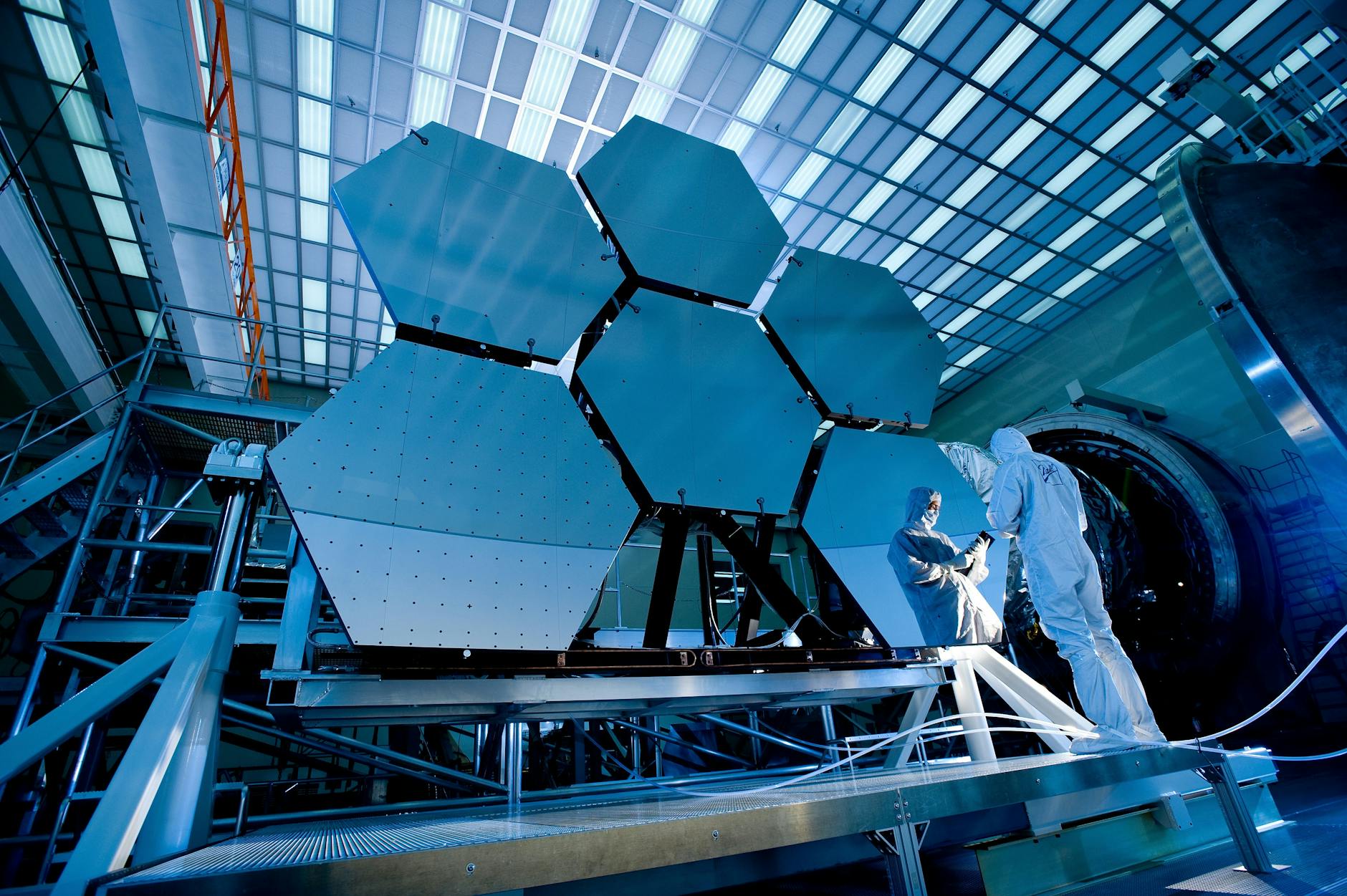
Integrated photonics narrows the gap between laboratory result and manufacturable part
Foundry access and standardised process design kits are doing for photonics roughly what they did for electro…
Metasurface optics are running into the manufacturing question
Flat lenses built from sub-wavelength structures work. Producing them at volume, at yield, with the tolerance…
Photonics found its foundry model, and the effect resembles electronics in the 1980s
Shared process design kits and multi-project wafer runs let a small team design a photonic chip without ownin…