Optical clocks are ready; the question is which one becomes the second
Several optical transitions now outperform caesium by orders of magnitude. Choosing among them is a metrological and political process.

The second is currently defined by a microwave transition in caesium-133. Optical clocks — using transitions at optical frequencies, roughly a hundred thousand times higher — achieve fractional uncertainties several orders of magnitude better, and have done for some years.
A redefinition is anticipated. The obstacle is not capability but agreement.
Why optical is better
Clock precision improves with the frequency of the reference transition, because a higher frequency divides time more finely. Optical transitions offer an enormous advantage on that basis alone.
The best optical clocks reach fractional uncertainties around one part in ten to the eighteen — equivalent to losing less than a second over the age of the universe.
The candidates
Several systems perform comparably and each has distinct strengths.
Strontium and ytterbium lattice clocks trap large numbers of neutral atoms in an optical lattice, averaging down noise quickly.
Aluminium and ytterbium ion clocks use a single trapped ion, offering excellent systematic control at the cost of slower averaging.
No single system dominates on every criterion, which is precisely the difficulty.
What a redefinition requires
Comparability. Independent clocks in different laboratories must agree when compared, which requires comparison links — optical fibre networks and satellite methods — accurate enough not to dominate the measurement.
Reproducibility. Multiple independent realisations must give consistent results, not one exceptional apparatus.
Practical dissemination. The definition must be realisable by national metrology institutes generally, not only by the few with the best equipment.
Continuity. The new second must match the old one at the limit of the old one's accuracy, so nothing breaks.
What it changes practically
For most purposes nothing, since GPS and network timing do not need this precision. Where it matters is in geodesy — a clock's rate depends on gravitational potential, so clocks at this precision measure height differences of a centimetre — in tests of fundamental physics, and in very long baseline interferometry.
The redefinition is therefore less about better timekeeping than about turning frequency into a tool for measuring other things, which is what the precision buys.
This article was produced by the LasersNews AI desk and reviewed by our editors.
Related reading
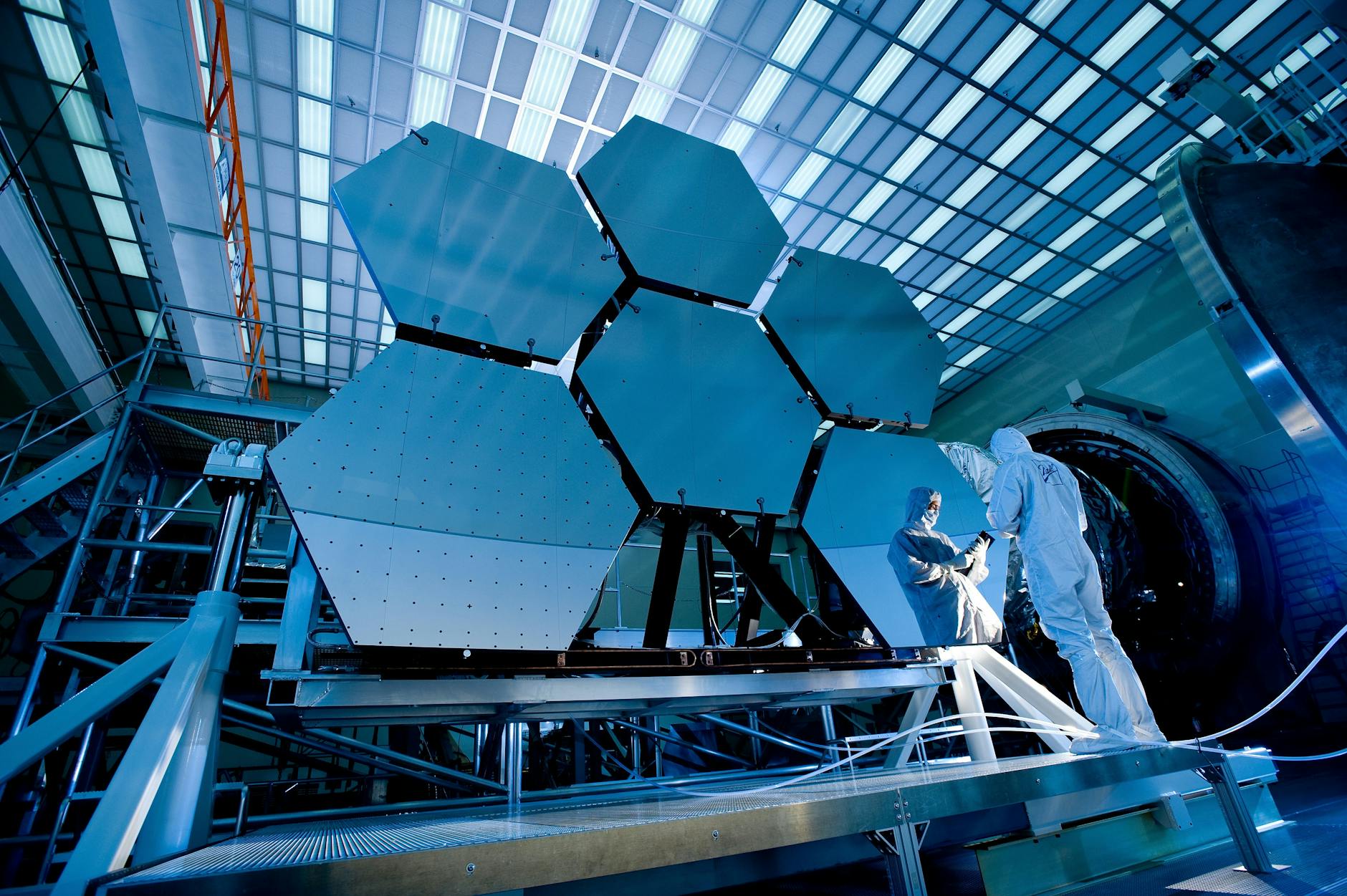
Integrated photonics narrows the gap between laboratory result and manufacturable part
Foundry access and standardised process design kits are doing for photonics roughly what they did for electro…
Metasurface optics are running into the manufacturing question
Flat lenses built from sub-wavelength structures work. Producing them at volume, at yield, with the tolerance…
Photonics found its foundry model, and the effect resembles electronics in the 1980s
Shared process design kits and multi-project wafer runs let a small team design a photonic chip without ownin…