Beam shaping moves from option to standard feature on industrial fiber sources
Adjustable ring-mode and multi-core output are changing what a source is expected to deliver, and the change is largely invisible from outside the machine.
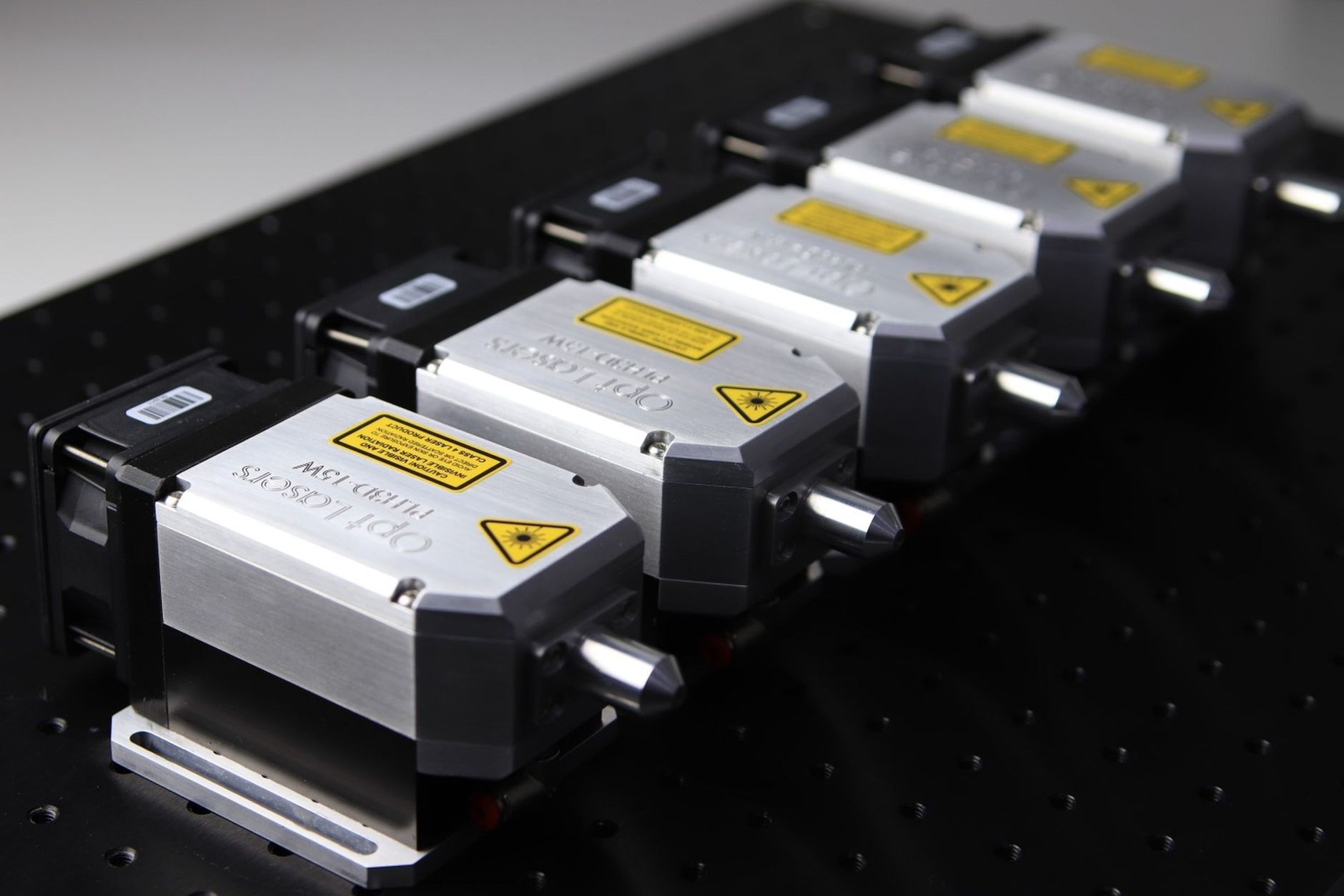
For most of the fiber laser's industrial life, the beam was a fixed property. A source produced a given power at a given beam parameter product, and process engineers adapted around it with optics and motion. That assumption is dissolving.
The core idea
Adjustable-mode sources deliver light through concentric output paths — typically a central core surrounded by one or more rings — with independently controlled power in each. The result is a beam whose spatial energy distribution can be changed electronically, in software, between jobs or even within a single weld.
The reason this matters is that many laser process failures are distribution problems rather than power problems. Spatter in welding, humping in high-speed seams, cracking in aluminium and copper, dross adhesion in cutting: all are strongly influenced by how energy is arranged across the interaction zone, not merely how much of it arrives.
Where it earns its keep
Copper is the clearest case. Its high reflectivity at infrared wavelengths and high thermal conductivity make stable coupling difficult, and the transition into keyhole welding tends to be abrupt and unstable. A ring component that preheats the surrounding material stabilises that transition, reducing spatter and porosity in a process that is now central to electric-vehicle battery and busbar assembly.
Aluminium benefits similarly, where a controlled trailing energy distribution slows solidification enough to reduce hot cracking in crack-sensitive alloys.
In cutting, redistributing energy at the kerf changes how melt is expelled, which shows up as cleaner bottom edges and less dross in thick section work — the finishing operations that quietly consume shop labour.
The integration question
The catch is that a software-adjustable beam only helps if something decides what the setting should be. Two beam profiles multiply the parameter space that process engineers must explore, and a source with more knobs is not automatically a source with better results.
That has pushed development toward stored process recipes, closed-loop monitoring that can detect keyhole instability, and machine-level abstractions that expose the capability as a named process rather than as raw ring-power percentages.
What to expect
The practical outcome is that beam shaping is becoming a baseline expectation on new industrial sources rather than a premium line item. For buyers, the relevant question is no longer whether a source can shape its beam, but whether the machine around it knows what to do with the capability.
Related reading
Adjustable ring mode stopped being a premium option
Splitting output between a central core and a surrounding ring gives one source several process personalities…
Pump diode lifetime, not fiber, dominates source economics
The gain fiber outlives the machine. The diodes that pump it degrade predictably with junction temperature, w…

M² tells you less about a process than the number's prominence suggests
Beam parameter product is a real physical quantity and a poor single-number summary. Two sources with the sam…