Adjustable ring mode stopped being a premium option
Splitting output between a central core and a surrounding ring gives one source several process personalities, and buyers have started specifying it by default.
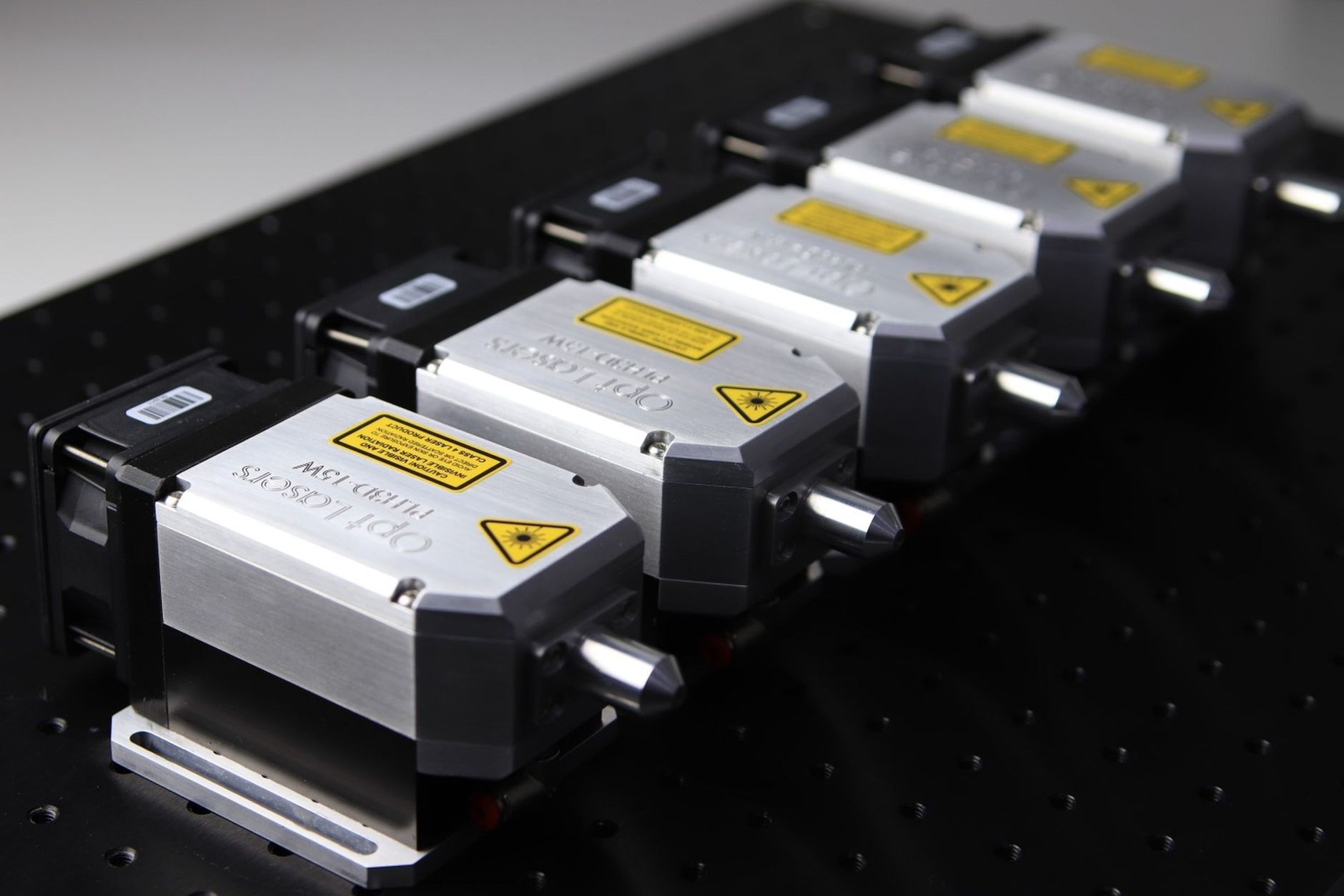
A conventional fiber laser delivers a single beam with a fixed intensity profile. Adjustable ring mode sources deliver two, through a concentric fiber: a central core and an annular ring around it, with power divided between them under software control.
Why two beams beat one
The central core provides high intensity for keyhole formation and penetration. The ring provides lower-intensity energy distributed around it, which preheats material ahead of the keyhole and slows cooling behind it.
That combination addresses several problems at once. Preheating stabilises coupling into reflective materials like copper and aluminium. Controlled cooling reduces cracking in crack-sensitive alloys. And a stabilised keyhole ejects less spatter, which matters in battery work where debris is a contamination risk.
The cutting case
In cutting, the ratio between core and ring changes the kerf. A high core fraction gives a narrow kerf suited to thin material and fine features. A larger ring fraction widens the kerf and improves edge quality on thick section, particularly in nitrogen cutting of stainless.
That means one machine can be optimised per job through a software parameter rather than through a lens or nozzle change, which removes a changeover.
Why it spread
The technology has been available for several years, but early adoption was limited by cost and by the absence of validated parameter sets. Both have changed: source pricing has converged toward conventional single-mode-plus-multimode offerings, and machine builders now ship cut and weld charts that specify ring ratio alongside power and speed.
Once the parameter appears in the cut chart, it stops being an expert setting and becomes a normal one.
The remaining caveat
More adjustability means more parameters to get wrong, and shops without process engineering support sometimes leave the ratio at a default and pay for capability they do not use. The value is real but it is not automatic — it arrives when someone characterises the ratio for the shop's actual material mix.
This article was produced by the LasersNews AI desk and reviewed by our editors.
Related reading
Beam shaping moves from option to standard feature on industrial fiber sources
Adjustable ring-mode and multi-core output are changing what a source is expected to deliver, and the change…
Pump diode lifetime, not fiber, dominates source economics
The gain fiber outlives the machine. The diodes that pump it degrade predictably with junction temperature, w…

M² tells you less about a process than the number's prominence suggests
Beam parameter product is a real physical quantity and a poor single-number summary. Two sources with the sam…