Battery plant construction schedules now move laser equipment demand
Cell manufacturing consumes welding, cutting and marking systems in large blocks. When a gigafactory schedule slips, the order book feels it.
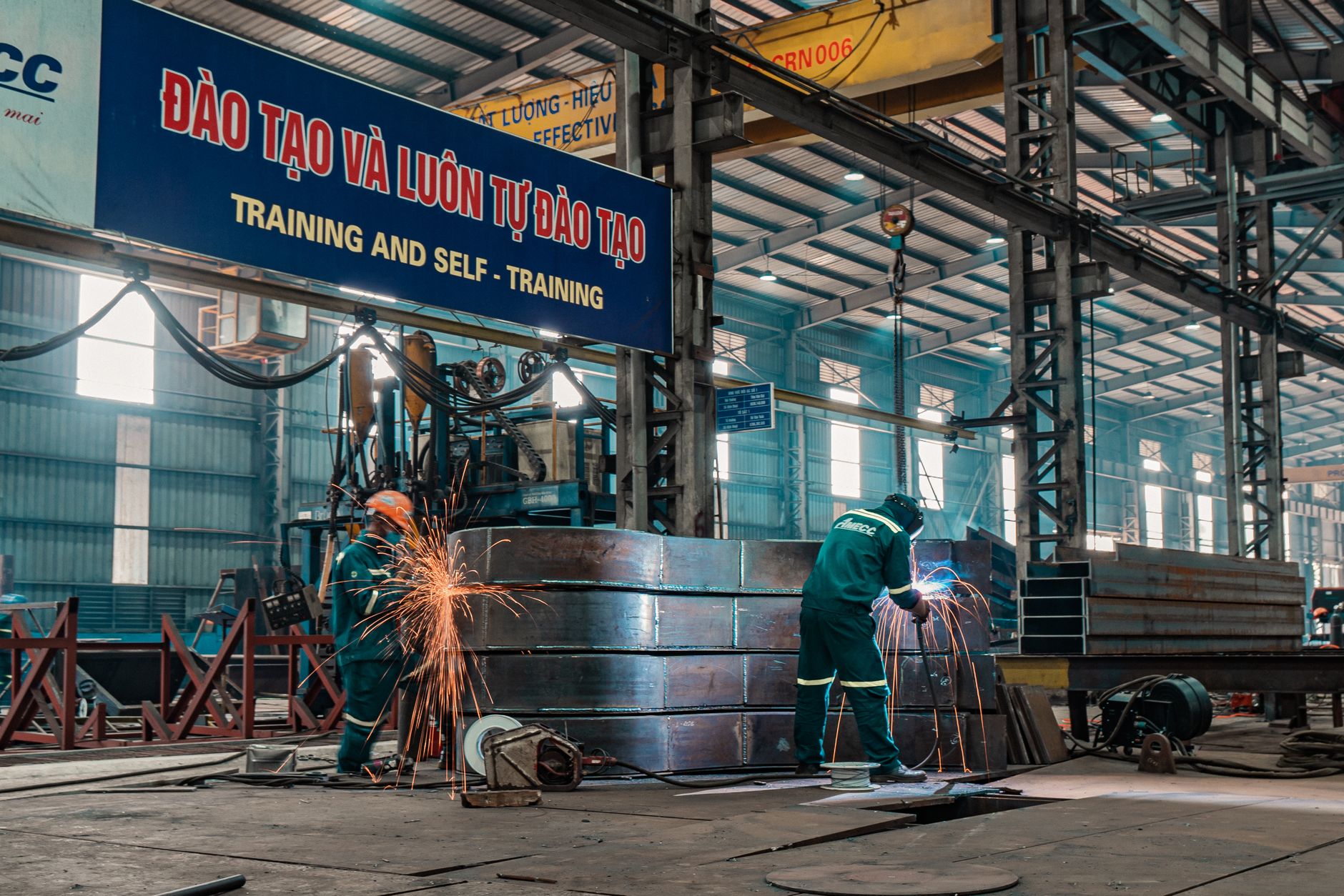
Battery cell and pack manufacturing has become a significant demand centre for industrial laser systems. Electrode cutting, tab welding, busbar joining, case sealing and traceability marking all use laser processes, and a single large facility represents a substantial equipment order.
That concentration has changed the demand pattern for suppliers exposed to it.
Why the demand is lumpy
A gigafactory is not a gradual capacity addition. It is a construction project with a defined schedule, and equipment orders cluster around specific phases. When the project proceeds, orders arrive in blocks. When it is delayed or cancelled, the entire block disappears.
Suppliers who built capacity against a pipeline of announced projects have found that announced capacity and constructed capacity differ considerably, and the gap is a function of vehicle demand forecasts, subsidy policy and financing conditions.
The processes involved
Electrode cutting at high speed with clean edges, since burrs cause internal shorts.
Tab and busbar welding, high volume, spatter-critical, frequently copper.
Case and cover sealing, requiring hermetic welds on thin aluminium or steel.
Marking for traceability, which regulation is pushing toward requirements that persist to end of life.
Each has different equipment suppliers, and the mix shifts with cell format. A change from cylindrical to prismatic or pouch cells alters which processes dominate.
The qualification dimension
Once a cell line is qualified, changing equipment suppliers is difficult. That makes early positioning valuable and creates strong incumbency in each production line, which is why suppliers compete hard for initial installations at what look like unattractive terms.
The current position
Battery capacity announcements have moderated in several regions relative to their peak, and some projects have been rescheduled. For laser suppliers, that has meant order timing uncertainty rather than absent demand, since the installed base still requires expansion, retooling and replacement.
The practical lesson for suppliers is diversification: businesses that treated battery demand as a growth market alongside others have absorbed the schedule volatility better than those that reoriented around it.
This article was produced by the LasersNews AI desk and reviewed by our editors.
Related reading
The laser market splits into two cycles running in opposite directions
Commodity cutting sources and specialised process equipment no longer share a business cycle, and that diverg…

Source prices keep falling and the margin has moved to the system
Per-watt pricing for industrial fiber sources has declined for a decade. Suppliers who stayed in components w…
Tariff policy has become a laser equipment specification
Machines are assembled from components crossing several borders. Buyers are now asking where the source, the…