From Kilowatts to Control: How Adaptive Optics and Gas Dynamics Redefine Laser Cutting Economics
Industrial fiber laser cutting shifts from raw power to integrated sensor control, dramatically improving first-pass yield and reducing single-part manufacturing expenses.
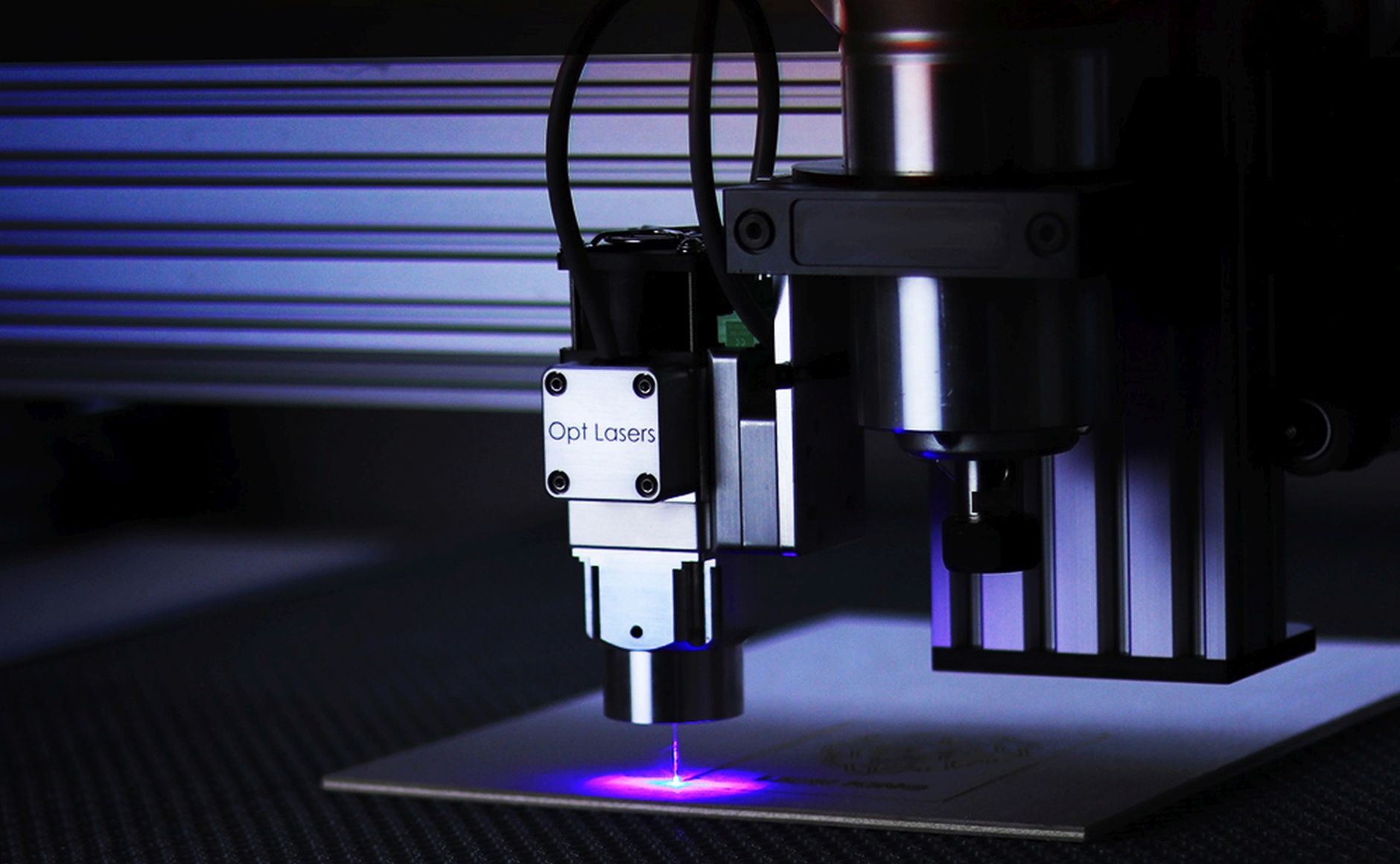
Industrial fiber laser cutting is undergoing a fundamental paradigm shift away from raw kilowatt deployment toward integrated, sensor-driven process control. As machine builders push average system power beyond twenty kilowatts, the limiting factor for sheet metal and tube fabrication has migrated from source availability to thermal management, assist gas dynamics, and adaptive cut head architecture. The latest generation of cutting systems prioritizes first-pass yield and cost per part over maximum traverse speed, leveraging real-time feedback loops and physics-based software models to stabilize melt pool ejection and minimize post-processing requirements.
Intelligent Cut Head Architectures
Modern high-power fiber cutting heads have evolved into closed-loop electromechanical platforms capable of continuous focal position adjustment and beam profile modulation. Traditional Gaussian distributions generate excessive kerf width and recast layers on materials exceeding twenty millimeters, prompting manufacturers to adopt top-hat or ring-mode beam shaping. These profiles deliver uniform intensity across the cut front, improving perpendicularity and reducing taper angles. Integrated plasma sensors and acoustic monitors detect keyhole instability within milliseconds, triggering automatic power ramp-down or assist gas pressure adjustments before defects propagate. This level of in-process correction compensates for thermal lensing in collimating optics and maintains consistent penetration depth despite variations in plate cleanliness or coating thickness. Consequently, operators report measurable reductions in abrasive blasting and edge grinding, directly lowering the effective cost per part.
Assist Gas Dynamics and Material Flow
The thermodynamic efficiency of laser cutting remains fundamentally tied to assist gas performance. Oxygen accelerates exothermic reactions for rapid carbon steel severance but leaves oxide scale that requires removal. High-pressure nitrogen produces clean, annealed edges on stainless steel and aluminum but demands significantly higher volumetric flow rates to achieve supersonic jet velocities at the nozzle exit. Recent developments in dual-chamber nozzle geometry and precision pressure regulators enable seamless switching between gases without mechanical intervention. Computational fluid dynamics modeling now guides nozzle contour design, optimizing stagnation pressure distribution and reducing turbulent boundary layer separation. By matching gas supply characteristics to specific alloy thicknesses and joint configurations, fabricators can extend nozzle life, decrease utility consumption, and maintain stable cut fronts even during high-speed tube profiling where rotational inertia traditionally disrupts gas laminar flow.
Software-Defined Nesting and Thermal Management
Contemporary nesting software has transcended simple geometric packing to incorporate finite element analysis and thermal distortion prediction engines. Algorithms now evaluate grain direction, residual stress maps, and heat accumulation patterns across complex part layouts. Dynamic cutting parameters are assigned per segment, adjusting laser power, pulse frequency, and feed rate according to local thermal load thresholds. Multi-axis bevel cutting capabilities further complicate path planning, requiring simultaneous coordination of tilt axes, rotary tables, and focal length compensation. When nesting routines integrate actual machine kinematics and toolpath acceleration limits, collision avoidance becomes deterministic rather than conservative. This software-driven approach minimizes idle travel distance, optimizes lead-in and lead-out trajectories, and distributes thermal exposure evenly across the worktable. The cumulative effect is a substantial increase in hourly throughput without sacrificing dimensional accuracy or surface finish.
This article was produced by the LasersNews AI desk and reviewed by our editors.
Related reading

Intelligent Cutting Heads and Algorithmic Nesting Redefine Laser Cost Per Part
Adaptive optics, dynamic focus, and AI-driven nesting are lowering scrap rates and optimizing cost per part i…
Bevel cutting heads move from specialist tool to mainstream fabrication kit
Five-axis cutting heads that were once reserved for heavy structural work are appearing on general-purpose fl…

Fiber cutting moves past raw wattage as fabricators chase cost per part
Sheet metal shops are discovering that beyond about 12 kW, cutting economics are decided by gas, optics and u…