Dissimilar metal joints live or die on intermetallic thickness
Aluminium to steel, copper to aluminium: the weld is strong until a brittle compound layer grows past a few micrometres, and controlling that means controlling time at temperature.
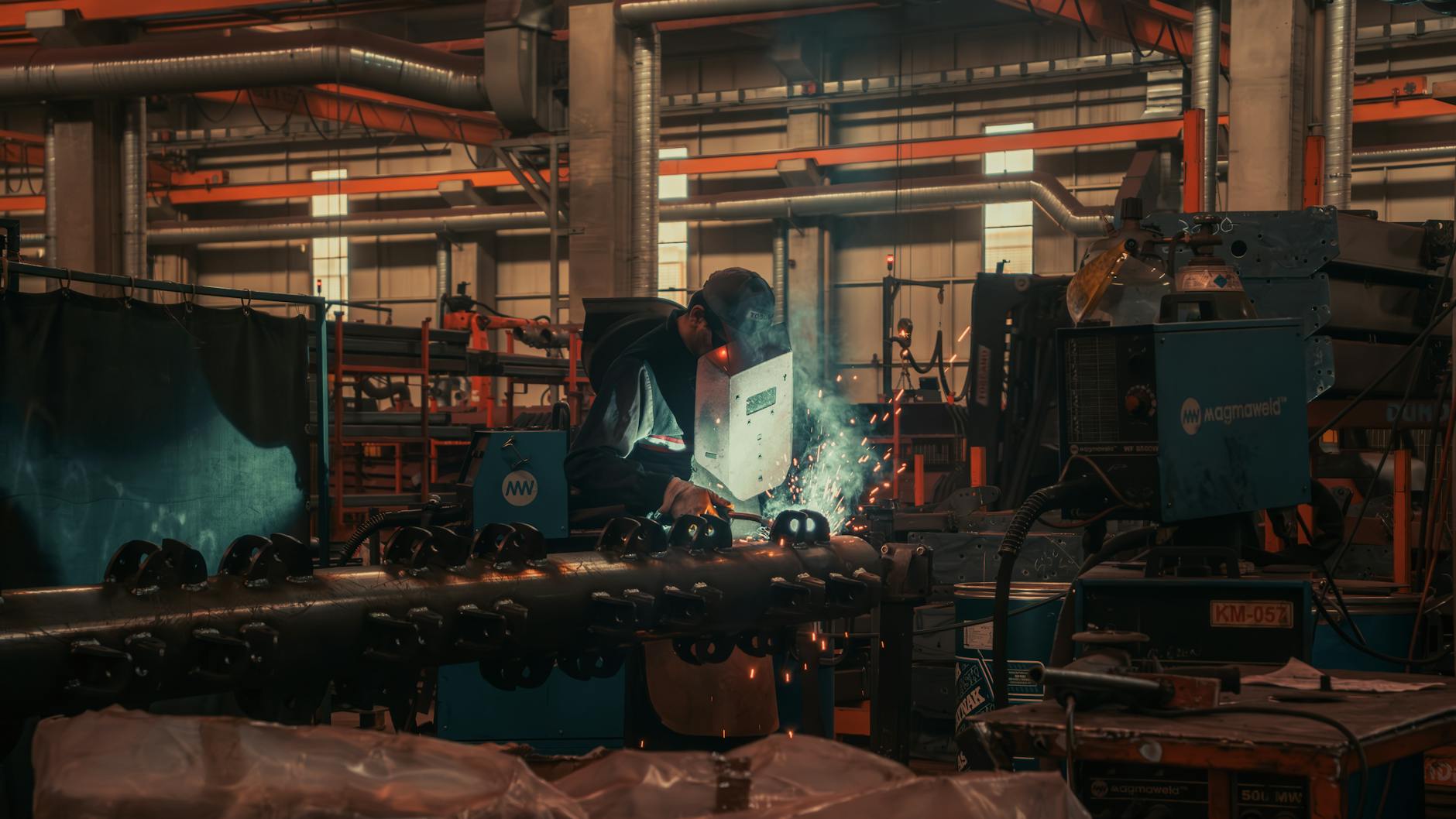
Joining dissimilar metals with a laser is less a welding problem than a metallurgy problem with a heat source attached. When aluminium meets steel, or copper meets aluminium, the two elements form intermetallic compounds at the interface. Those compounds are hard and brittle, and above a few micrometres of thickness they turn a sound-looking joint into one that fails without warning.
Thickness is a function of time
Intermetallic growth follows diffusion kinetics: the layer thickens with time spent above a threshold temperature. The practical implication is that a very short, very intense thermal cycle produces a thinner layer than a longer, gentler one delivering the same total energy.
This inverts an instinct carried over from arc welding, where slower and hotter often means sounder. Here, faster is metallurgically better, provided fusion still occurs.
The techniques that follow
Pulse shaping. Tailoring the temporal profile of the pulse limits time at temperature while still achieving melting, which is why pulsed and modulated sources appear frequently in dissimilar joining.
Offsetting the beam. Aiming slightly onto the higher-melting-point material and letting conduction melt the other limits mixing, which limits compound formation.
Interlayers. A thin foil of a third material — nickel between copper and steel, for instance — can prevent the problematic pair from meeting directly.
Mechanical interlocking. In some copper-aluminium work, the goal is deliberately not a fusion weld but a mechanically keyed joint with minimal mixing.
Verifying it
The awkward part is inspection. Intermetallic thickness is a microstructural property, invisible to the usual production checks. Practitioners rely on destructive metallography during qualification and then hold the process constant, which places heavy weight on process monitoring and on keeping material sources stable.
Where it is heading
Demand is coming almost entirely from electrification: battery interconnects, busbars and motor terminations all involve copper-aluminium or copper-steel transitions at scale. That volume is what has pushed a niche metallurgical problem into mainstream production engineering.
This article was produced by the LasersNews AI desk and reviewed by our editors.
Related reading
Shift Toward Data-Driven Beam Modulation and Closed-Loop Monitoring Reshapes Laser Welding
Advanced beam modulation and real-time monitoring are transforming laser welding from a manual craft into a p…

Remote Laser Welding Systems Converge on Dynamic Beam Shaping and Closed-Loop Monitoring
Advanced remote laser welding systems are merging dynamic beam shaping with real-time optical monitoring to m…

Handheld laser welding grows up as fume, safety and training catch up to the hardware
The tool that upended small-shop fabrication is now facing the unglamorous engineering work that decides whet…